
How AI Continues to Rewrite the Advisor Stack
Interested in testing out YCharts for free?
Start 7-Day Free TrialThe Stack Keeps Gaining a New Top Layer
New artificial intelligence (AI) offerings for financial professionals arrive nearly every month. Anthropic has continued expanding Claude for financial professionals, with offerings and workflows aimed at advisory practices, investment teams and other financial-services users. Custodians, asset managers and wealth technology providers are shipping their own connectors and agents. Enterprise firms are standing up agents of their own. Each launch promises a single place to start the day, and each one plugs into the platforms a firm already runs.
The tools differ. The underlying problem does not. An AI assistant is only as useful as the data it can reach, which makes the more durable question not which assistant a firm adopts, but what that assistant can get to once it is running.
Table of Contents
The Assistant Layer Sits Above the Stack, Not In Place of It
Peter Nolan, head of asset and wealth management at Anthropic, told WealthManagement the company is not trying to replace existing tools, and that the goal is driving more utilization of the stack advisors already have.
“A 10-advisor RIA turns on Claude for Financial Advisors. At $70 to $120 per user per month — Anthropic’s own ballpark — that’s somewhere between $8,400 and $14,400 a year, before setup, before training, before anyone’s time spent configuring nine-plus connectors.”
– Aaron Steinberg, Founder & CEO of ThrivAI
That is the pattern across these launches. An assistant is not a new planning platform or a new client relationship management (CRM) platform. It sits above the tools a firm already pays for and pulls from them. A front door, not a replacement.
Which is why what sits underneath matters more than which door a firm walks through.
Where YCharts Fits
YCharts is the research layer that gap describes: investment research, analytics and client communications across stocks, mutual funds, exchange-traded funds (ETFs), separate accounts and economic indicators.
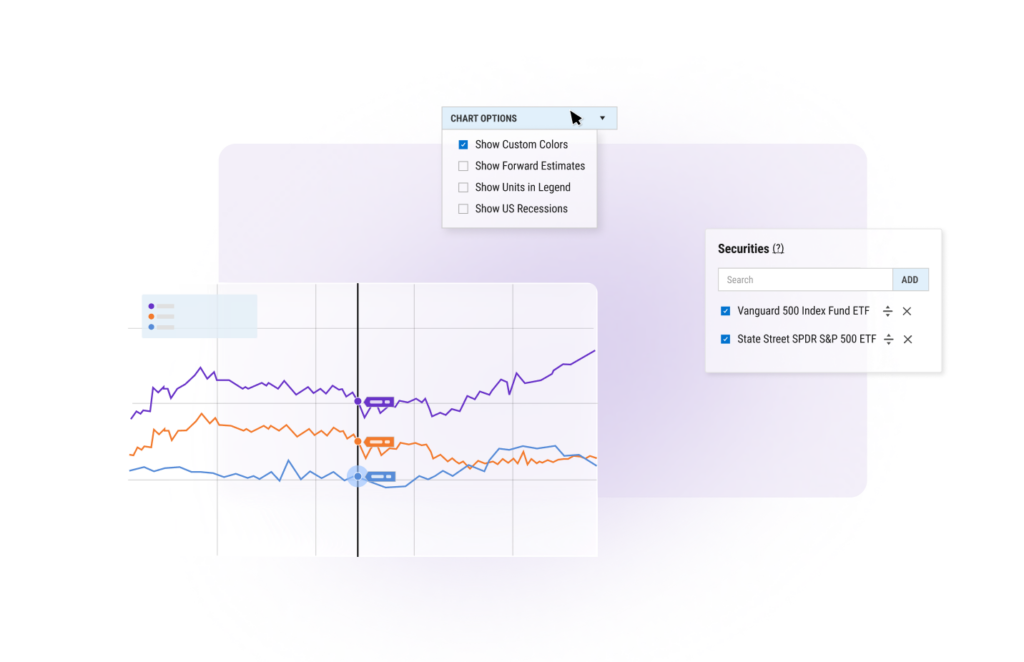
Fundamental Charts builds the visual that explains performance. Comp Tables line up holdings against alternatives. The Fund Screener filters thousands of funds across financial metrics. Portfolios tests how a proposed allocation would have behaved against the current one.
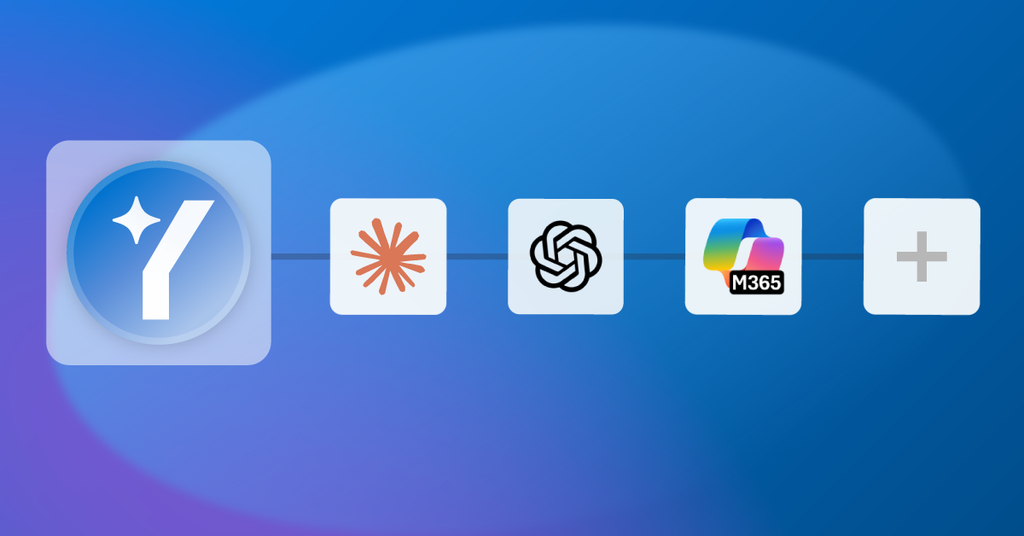
Advisors can bring that layer to an AI assistant through the YCharts MCP Server, which connects agents directly to YCharts data with sign-in through the firm’s own credentials and permissions set tool by tool.
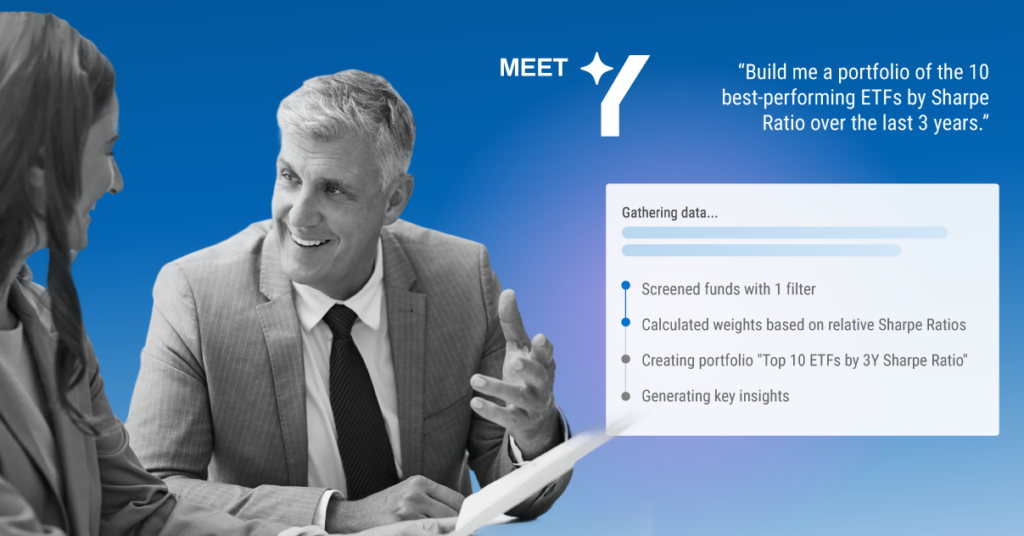
Or they can start in the data. Y is a YCharts agent that works natively inside the platform, taking plain-language requests to build portfolios, run reports, screen securities and generate client-ready content. Y also runs in the background, monitoring market conditions and executing scheduled reports.
Two entry points. The firm picks the door.

What Changes When YCharts Is the Data Layer
AI Agent works from the book of business you already manage in YCharts: your client accounts, model portfolios, and holdings. It is not starting from a blank prompt.
The same question returns the same numbers. Data is pulled directly from YCharts rather than generated, and YCharts data and calculations are designed to be traceable and reproducible. That matters when a client asks where a number came from.
Y understands how investment data is structured. It works from portfolio structures, fund metrics, screener logic, and report formats as they exist on the platform. General-purpose AI tools do not have access to that layer.
An output and a deliverable are different things. A client-facing review has to carry firm branding, consistent formatting, correct disclosures, and figures that reconcile with the last version of the same report. Y builds into the report templates already set up on YCharts, so what it produces is ready to send.
The Assistant Answers. The Advisor Is Accountable.
Daniel Gourvitch, President of Mercer Advisors, named the constraint in Anthropic’s latest launch announcement. Claude helps their teams work across clients’ financial lives, he said, while judgment and accountability stay with the advisor.
That is the gap these tools create. An AI assistant cannot independently guarantee that the data behind an answer is complete or correct. If the underlying data fails to account for something like a stock split or excludes closed funds from a peer comparison, the resulting answer can inherit those problems. Those are problems with the source, not the model, and a more capable assistant does not fix them.
The advisor absorbs that risk. When the number lands in a client deck, their name is on it, not the software’s.
Closing the gap means the assistant has to reach data that is already vetted. YCharts data and calculations are designed to be sourced, traceable and reproducible, which is what lets an advisor answer where a number came from when a client or a chief compliance officer asks.
What Advisors Should Do Now
Understand what each AI service offers, and what it does not. New offerings arrive constantly, and they are built for different users doing different work. Before evaluating one, know what it connects to and what it leaves out. For most advisory practices, the gap is investment research and comparison data.
Ask where every number comes from. Before a figure reaches a client, an advisor should be able to name its source and reproduce it.
Decide on a starting point. Some firms want advisors beginning within an assistant. Others want them beginning in the data. Both work, and the choice belongs to the firm.
Request a demo to see how firms are connecting YCharts to their AI workflows.
Ready to Move On From Your Investment Research and Analytics Platform?
Follow YCharts Social Media to Unlock More Content!
Next Article
The Best Performing Bond ETFs over the Last 10 YearsRead More →