
How MCPs Became Core Advisor Tech Infrastructure
Interested in testing out YCharts for free?
Start 7-Day Free TrialWhat Is MCP?
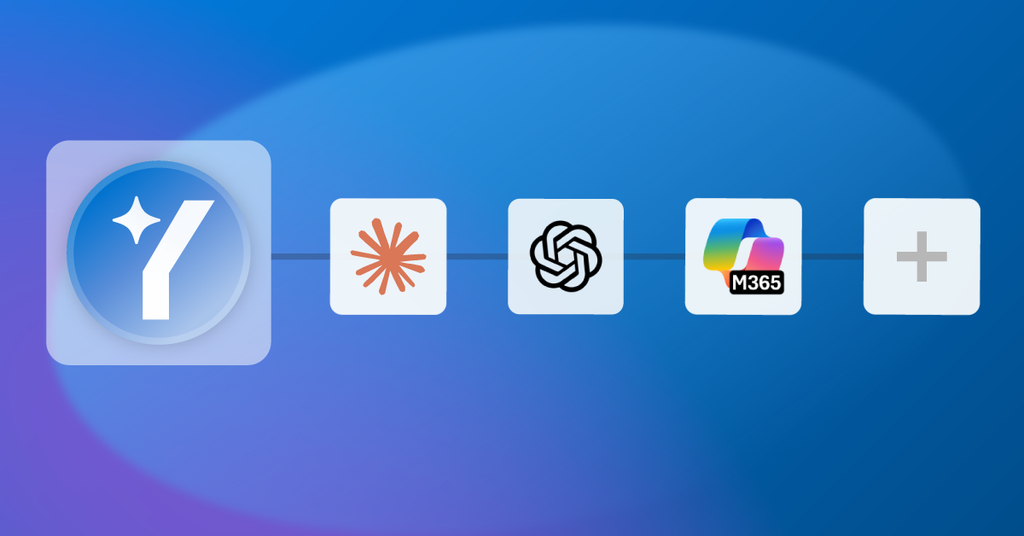
Model Context Protocol (MCP) is an open standard, released by Anthropic in late 2024 and adopted broadly across the AI industry, that defines how an AI assistant connects to an outside system.
Before it existed, connecting an assistant to a data platform meant a custom build for every pairing. One integration for one assistant against one provider, repeated for every combination. Twenty assistants and twenty data sources meant hundreds of separate engineering projects, which is why many integrations weren’t built for other reasons too, like demand or licensing.
MCP replaces that with one connection per side. A provider stands up an MCP server once, and any assistant that speaks the protocol can use it. The assistant can discover the tools and capabilities the MCP server makes available rather than relying on a custom integration built specifically for that platform.
Table of Contents
The Connection Layer Is Becoming the Question
Nearly every month, there is another artificial intelligence (AI) assistant built for financial professionals. Anthropic released Claude for Financial Advisors in September. Custodians, asset managers and wealth technology providers are shipping their own connectors and agents. Enterprise firms are standing up internal agents of their own.
The tools differ. The underlying problem does not. An AI assistant is only as useful as the data it can reach, and every one of these products has to answer the same question: how does the assistant get to a firm’s information without a custom engineering project for every combination.
MCP is emerging as the answer. It is an open standard that lets an AI assistant connect to an outside platform and work with what it finds there. Build one MCP server and MCP-compatible assistants can connect to it without requiring a bespoke integration for each one. What makes this worth writing about is not the standard itself. It is that advisory firms started asking for it before vendors finished explaining it.
Demand Is Arriving From the Firm Side
In an analysis of 40 client conversations held between July and August 2026, MCP came up several hundred times across 75% of them.
Two groups are driving it. Platform and technology leads are asking about connection capability during initial evaluation. Multi-office registered investment advisors (RIAs) are scoping how to power internal AI agents with vetted investment data.
What Are Firms Asking?
The same questions surface again and again.
What workflow are firms building first?
Prospect onboarding and portfolio comparison.
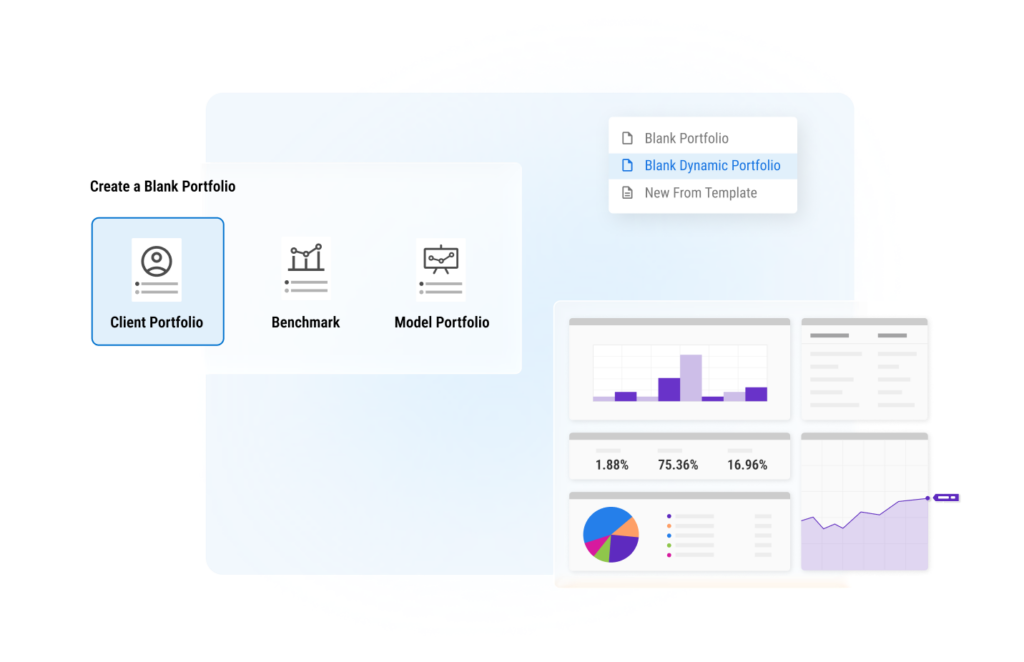
An advisor drops a prospect’s brokerage statement into their AI assistant, the holdings are compared against the firm’s Model Portfolios on performance and allocation, and the output comes back as client-ready proposals or talking points. All without leaving the chat interface.
Does the YCharts MCP Server cost extra?
Clients manage their own third-party AI platform usage and tokens separately. Reach out to a sales person for more details.
What data flows through the YCharts MCP Server?
Stock and fund data, portfolio-level metrics (including asset allocation, compound annual growth rate (CAGR), correlation, covariance, and historical performance), economic indicators, watchlists, model portfolios, and generated PDF reports. All available through conversational prompts.
How do security, authentication and governance work?
A common question as firms move from testing toward enterprise rollout, and the answer is individual user entitlements, OAuth authentication and SOC 2 Type II compliance standards.
The nature of the question has shifted. Early on, firms asked about baseline data protection: whether personally identifiable information (PII) is retained and whether client data is used for model training. YCharts does not retain PII or use client data for model training. Usage on third-party AI platforms is governed by those platforms’ terms.
How are firms building custom agents?
By embedding the YCharts MCP Server into proprietary internal agents as core financial data infrastructure.
Rather than adopting a single assistant wholesale, larger firms are building agents shaped around how their advisors actually work, then connecting vetted data sources underneath. MCP gives them that connection without a custom integration build. Those firms want template flexibility and raw data so they can construct their own advisory skills and report outputs.
What This Signals for AI in Wealth Management
The number of AI assistants available to advisors will keep growing. Which one a firm chooses matters less than what that assistant can reach and whether the firm controls the connection.
The workflows driving real adoption are unglamorous and specific: statement extraction, economic data lookup, automated report generation. That is usually what genuine adoption looks like.
Whether a firm is running conversational prompts in an off-the-shelf assistant or building a custom enterprise agent, the connection layer determines what is possible underneath it.
Request a demo to see how firms are connecting the YCharts MCP Server to their AI workflows.
Ready to Move On From Your Investment Research and Analytics Platform?
Follow YCharts Social Media to Unlock More Content!
Next Article
How Does the Market Historically Respond to Fed Rate Hikes?Read More →